

A strong windstorm passes through Durham, and the next morning you step outside and see it — shingles on the lawn, or worse, a bare patch staring back at you from the roof. It is a sinking feeling. But it does not always mean a new roof.
Wind can lift a few shingles, crease them, or tear them clean off. Sometimes the fix is small and quick. Other times the damage is a sign the whole roof is done. Knowing the difference saves you real money, and it keeps a small problem from turning into a leak.
The first thing to understand is how wind works on a roof. Shingles are held down by a strip of sealant and nails. When wind gets under an edge, it can break that seal. Once the seal is gone, the shingle flaps, cracks, or flies off. That is why most wind damage starts at the edges and corners, and why shingle roof repair is one of the most common calls after a storm.
How Wind Actually Damages Shingles
Wind does not hit a roof evenly. It pushes hardest at the ridges, the eaves, and the corners. Shingles there take the most force. A gust can lift a tab just enough to break the seal underneath, even if the shingle looks fine from the ground.
Once a shingle is unsealed, the next gust lifts it further. It bends back and forth until it creases. A creased shingle is a weak shingle. It will crack, and it will leak. This is the damage homeowners miss most, because from the street everything still looks normal.
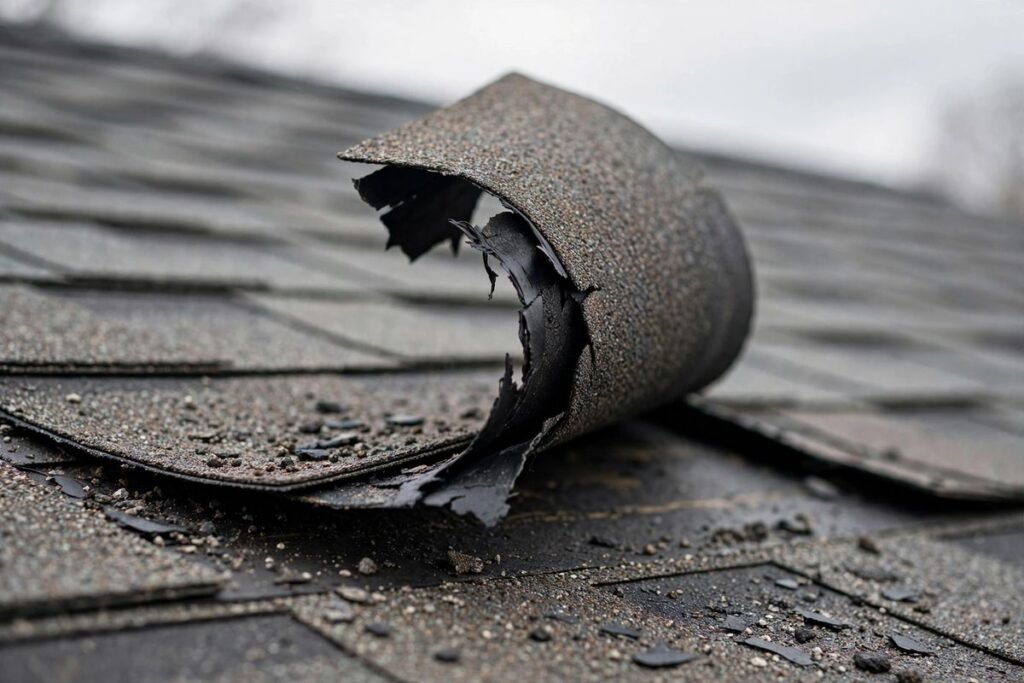
Age makes it worse. Shingles lose flexibility as they get older, and the sealant dries out. A ten-year-old roof handles wind very differently from a roof that is twenty-five years old. Heat from Durham summers speeds that aging up.
The wind speed matters too. Shingles are rated for certain wind speeds, but ratings assume a proper install. If nails were placed too high or the sealant never bonded well, even a moderate storm can do damage.
Signs Your Shingles Can Be Repaired
A repair makes sense when the damage is small and the rest of the roof is in good shape. A few missing shingles after one storm, with the deck underneath dry and solid, that is a repair.
Look for shingles that are lifted but not torn. If the tab is still whole and the seal can be re-bonded, a roofer can often press it back down and seal it. Same with a single cracked shingle. One bad shingle does not mean a bad roof.
The age of the roof matters here. If your roof is under fifteen years old and the damage covers less than a quarter of one slope, repair is usually the smart call. The shingles around the damage are still strong enough to hold.
Matching matters too. A repair looks right only if the new shingles match the old ones in color and style. On a newer roof, that is easy. On an older roof, the color may have faded, and a patch can stand out. A good roofer will tell you honestly when a patch will show.
Signs You Need a Full Replacement
Replacement is the answer when the damage is widespread. If shingles are missing across several slopes, or whole sections are lifted, patching becomes a losing game. You fix one spot while the next storm takes the next one.
Curling and buckling are warning signs. If shingles are curling at the edges or buckling in the middle, the roof is near the end of its life. Wind just exposes what age already did. No amount of patching fixes a worn-out roof.

Granule loss tells the same story. Check your gutters. If they are full of the sandy granules that coat shingles, the protective layer is wearing off. Bare shingles bake in the sun, crack faster, and lift easier in wind.
Leaks in more than one place point to replacement as well. One leak can be a single bad shingle. Several leaks, in different rooms, usually mean the roof system itself is failing. At that point a new roof costs less than years of repairs.
And if your roof is over twenty years old with wind damage on top of it, replacement is almost always the better spend. You are paying for a repair on a roof that will need replacing soon anyway.
What Does Wind Damage Repair Cost in Durham, NC
A small wind repair in Durham usually runs $200 to $600. That is a handful of shingles, resealing lifted tabs, and checking the surrounding area. Most of these jobs take a few hours.
Bigger repairs, a full slope section or damage around a valley or chimney, usually run $600 to $1,500. The price depends on how many shingles are involved and how hard the spot is to reach.
A full roof replacement is a different number entirely, usually $8,000 to $15,000 or more for a typical Durham home, depending on size, pitch, and shingle type. That is why the repair-or-replace call matters so much. Getting it wrong either wastes money or leaves you exposed.
Get the estimate in writing before any work starts. A straight answer on price, and what exactly is included, protects you from surprises later. If a roofer will not put it in writing, that is a red flag.
Repair or Replace: How to Decide
Start with the age of your roof. Under fifteen years with limited damage, repair. Over twenty with damage in several places, replace. Between fifteen and twenty, it comes down to how widespread the damage is.
Then look at how much of the roof is affected. Less than a quarter of one slope, repair is fine. More than that, and you are better off replacing, because matching and sealing across a large patched area rarely holds up the way a new roof does.
Think about the next storm, not just the last one. Durham gets its share of wind and heavy rain through the year. A roof that barely survived this storm is unlikely to survive the next one. If your roof took storm damage across more than one slope, a full replacement is often the safer long-term call.
A roofer’s inspection settles it. A good roofer will get on the roof, check the deck underneath, look at the flashing, and tell you straight whether a repair will last. If they push replacement for a small repair, get a second opinion.
Will Insurance Pay for Wind-Damaged Shingles?
In most cases, yes. Wind damage is usually covered by a standard homeowner’s policy. Insurance pays for sudden storm damage, not for wear and tear. That is the line that matters.
If your roof was already old and worn, the insurer may say the damage came from age, not the storm. That is why photos matter. Take pictures of the damage right after the storm, before anything is cleaned up or repaired.
File the claim quickly and keep every receipt. If you pay for an emergency tarp or a temporary repair, save the invoice. Those costs usually go into the claim. Do not wait weeks to call your insurer.
An adjuster will come out to look at the roof. Be there if you can, and have your roofer there too. A roofer can point out damage the adjuster might miss, like lifted shingles that look fine from the ground.
What to Do Right After a Windstorm
First, stay off the roof. Wet, wind-damaged shingles are slippery, and a weakened roof can be unsafe underfoot. Look from the ground with binoculars if you have them.
Walk around the house and look for shingles on the ground, bent gutters, or debris on the roof. Check the attic for daylight coming through or wet spots on the insulation. If you see water coming in, put a bucket under it and call a roofer right away.
Cover any open spots fast. A tarp over exposed decking keeps rain out until a proper repair happens. Do not wait for the next rain to find out how bad the leak is.
Wind damage does not always mean a new roof, but it does mean you should not wait. A few lifted shingles can turn into a leak in one good rainstorm. If your roof took a hit in the last storm, get it looked at soon. Roof Repair Durham offers a free estimate before any work starts, so you will know exactly where you stand.