

A tree limb just came through your roof, or the wind peeled back a row of shingles, and rain is coming in. Before anything else gets fixed, the hole has to be covered. That cover is an emergency roof tarp.
A tarp is not a repair. It is a temporary shield that keeps water out while you sort out the real fix, the insurance claim, and the roofer’s schedule. Done right, it saves you thousands in water damage. Done wrong, it can make things worse.
If water is coming in right now, do not wait for the rain to stop. A roofer who handles emergency roof repair can get a tarp on fast and keep the inside of your home dry.
What an Emergency Roof Tarp Actually Does
A tarp covers the damaged part of the roof so rain cannot get in. It is nailed or weighted down over the hole, the missing shingles, or the cracked section, and it channels water off the roof the way shingles would.
It does not fix the roof. It buys time — days or weeks — while the permanent repair is planned. Think of it as a bandage: it stops the bleeding, but it is not the treatment.
A good tarp job also protects the inside of your home. Ceilings, insulation, drywall, and wiring all suffer when water keeps coming in. Every hour the roof stays open, the repair bill grows.
How Much Does an Emergency Roof Tarp Cost in NC
In North Carolina, a basic emergency tarp job usually runs from $200 to $600. That covers a small to medium area — a few missing shingles, a small hole, or one damaged slope — with the tarp, the fasteners, and the labor to put it on safely.
A larger job costs more. Covering a whole slope or a big section of roof can run $600 to $1,500, and a badly damaged roof that needs several tarps and extra crew can go higher. Steep roofs, two-story homes, and storm conditions all add to the price.
The time of the call matters too. A tarp put on during the day in calm weather costs less than one put on at 2 a.m. in the middle of a storm. Emergency and after-hours calls carry a higher rate, because the crew is working in the dark and the rain.
Ask what the price includes before the work starts. A proper quote covers the tarp itself, the wood strips that hold it down, the labor, and the trip out. If the roofer also documents the damage with photos for your insurance claim, that is part of the job, not an extra.
One thing that surprises people: your insurance often pays for the tarp. Tarping counts as mitigation — the step your policy expects you to take to stop more damage. Keep the receipt and the photos, and the cost usually goes into the claim.
When to Call for a Tarp Right Away
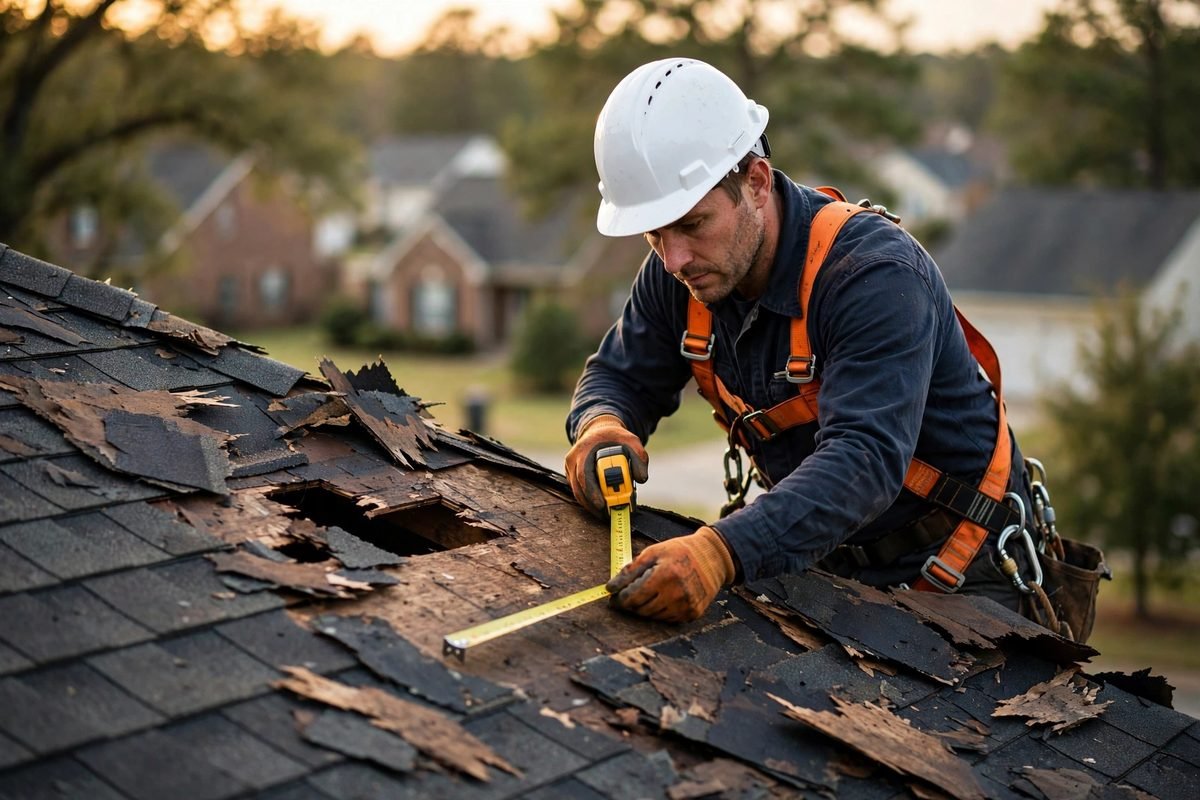
Call as soon as you see water coming in, or as soon as you see the roof is open. A missing patch of shingles might look small from the ground, but every inch of open roof lets rain straight into the attic.
A tree on the roof is an automatic call. So is a hole you can see daylight through, a ceiling that is sagging with water, or shingles scattered across the yard after a storm. Do not wait to see if it gets worse — it will.
If another storm is coming in the next day or two, that is another reason to move fast. A tarp put on today protects you from tomorrow’s rain. Waiting until after the next storm doubles the damage and the cost.
A roofer who handles storm damage roof repair in Durham, NC can usually get someone out the same day for an active leak.
The Do’s: What to Do First
Do stay safe and stay off the roof. A wet roof is slippery, and a damaged roof can have soft spots you cannot see. Let the roofer climb. Your job is inside the house.
Do put buckets under drips and move furniture, electronics, and rugs away from the wet area. Lay towels along the path of the water. Small steps now save the floors and the furniture.
Do take photos and video of everything before anyone touches the roof. Photograph the damage from the ground, the water inside, and the ceiling stains. These pictures are the proof your insurance claim needs.
Do keep every receipt. The tarp, the buckets, the towels, the roofer’s invoice — all of it can go into the claim. Put it all in one folder, physical or digital, so nothing gets lost.
Do ask the roofer to document the damage too. A roofer’s photos and a short written note about what was damaged carry weight with an adjuster, because they come from a professional.
The Don’ts: Mistakes That Make It Worse
Do not climb on a wet or damaged roof yourself. Every year people get hurt doing exactly this. A tarp is not worth a fall.
Do not use a thin painter’s tarp or a cheap blue tarp from the bargain bin and call it done. Thin plastic tears in the wind, and a tarp that blows off at midnight leaves the roof open again. A proper roof tarp is heavy, thick, and fastened down with wood strips.
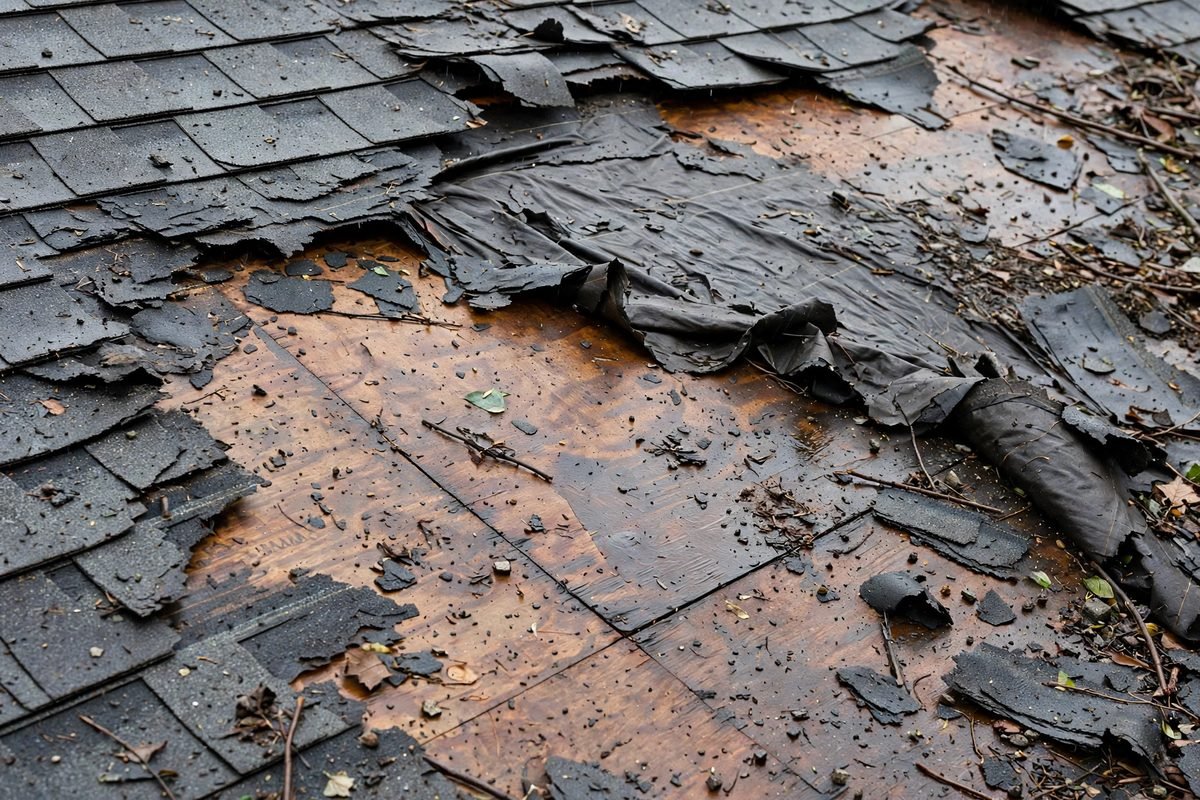
Do not nail the tarp through good shingles. Nails through healthy shingles punch new holes in a roof that was fine. The tarp should be fastened over the damaged area, with the edges secured to the roof deck or wrapped around wood strips, not nailed through the middle of good roofing.
Do not leave a tarp on for months and forget about it. A tarp is temporary. Sun and wind wear it down, and a worn tarp leaks just like an open roof. Plan the permanent repair within a few weeks.
Do not sign papers you do not understand. After a storm, people sometimes show up offering to tarp the roof and handle the insurance claim if you sign over the claim. Read everything first. Never hand control of your claim to a stranger.
How Long Can a Tarp Stay On?
A well-installed tarp can last several weeks, sometimes a couple of months, if the weather stays calm. But that is the limit, not the plan.
Wind lifts the edges, sun weakens the plastic, and every heavy rain tests the fasteners. A tarp that was solid in week one can be flapping loose by week six. Check it after every storm, and look for water stains on the ceiling — a stain means the tarp is failing.
Use the time the tarp buys you to get the real repair scheduled. Get the estimate, file the claim, and book the roofer. The tarp is the pause button, not the fix.
Will Insurance Pay for the Tarp?
In most cases, yes. Homeowners policies in North Carolina cover sudden storm damage, and the tarp is part of stopping that damage from getting worse. Insurers call this mitigation, and they expect you to do it.
The key is proof. Keep the roofer’s invoice, the receipt for the tarp, and the photos taken before and after the tarp went on. A claim with a dated invoice and clear photos is much easier to approve than one with no paperwork.
If the insurer’s first offer does not include the tarp cost, point it out. Send the invoice and the photos with a short note. Mitigation costs are a normal part of a storm claim, and they are often added once the paperwork is shown.
A tarp is the fastest way to stop a bad roof day from becoming a ruined house. Cover it fast, photograph everything, and get the permanent repair booked. If your roof took a hit in the storm, Roof Repair Durham can get a tarp on, give you a free estimate, and help you document the damage the right way. Call (984) 230-5620 to get started.