

It is past midnight, rain is hammering the roof, and then you hear it, drip, drip, drip. A dark stain is spreading across the ceiling, or water is already coming through. Your first thought is panic. Do not be. A leak tonight is fixable, and what you do in the next hour matters more than anything else.
This is the exact situation Durham homeowners face after a heavy storm. Water finds the weakest point in a roof and comes straight through. The good news is that most of the damage tonight comes not from the leak itself, but from water sitting where it should not. Move fast, and you keep the damage small.
A roof leak after heavy rain usually starts with one of a few things, a lifted shingle, a cracked flashing, or a clogged valley that turned into a small river. The water rarely comes in where you see the stain. It travels along the deck and drops down somewhere else. That is why roof leak repair starts with tracing the water, not just patching the stain.
First, Stay Calm and Stay Safe
Before you do anything else, think about safety. Water and electricity do not mix. If water is dripping near a light fixture, a ceiling fan, or an outlet, turn off the power to that room at the breaker box. Do not touch a wet switch.
Stay off the roof tonight. A wet roof in the dark, in the rain, is dangerous even for a roofer. No leak is worth a fall. Everything that needs doing tonight can be done from inside the house.
If the ceiling is bulging or sagging where the water is collecting, be careful. That bulge is a pocket of water, and it can be heavy. Do not stand directly under it. If it looks like it might come down, move furniture away and let it be.
Stop the Water Inside Your Home
Your first job is to catch the water. Put a bucket, a pot, or a trash can under the drip. If the drip is spreading, lay towels around the bucket. Move anything valuable, electronics, furniture, rugs, away from the wet area.
If the ceiling is bulging with trapped water, you can let it drain in a controlled way. Poke a small hole in the lowest point of the bulge with a screwdriver and let the water run into a bucket. It feels wrong, but it is better than the whole ceiling coming down at once. Put a bucket under it first, and keep the hole small.

Mop up the water on the floor as it comes. Water that sits on wood floors or carpet for hours does more damage than the leak itself. Keep towels handy and check the bucket every so often. A fast drip fills a bucket quicker than you think.
If you have a fan, point it at the wet area once the drip is caught. Airflow helps the ceiling and walls start drying. Do not run a fan near standing water or wet outlets.
Find Where the Leak Is Coming From
The stain on your ceiling is rarely directly under the leak. Water runs along the roof deck, follows a rafter, and drops down at the lowest point. The actual hole can be several feet away, usually uphill from the stain.
Go into the attic with a flashlight if it is safe to do so. Look for wet insulation, darkened wood, or water running down a rafter. Follow the wet trail uphill. The entry point is often near a vent, a chimney, or a valley.
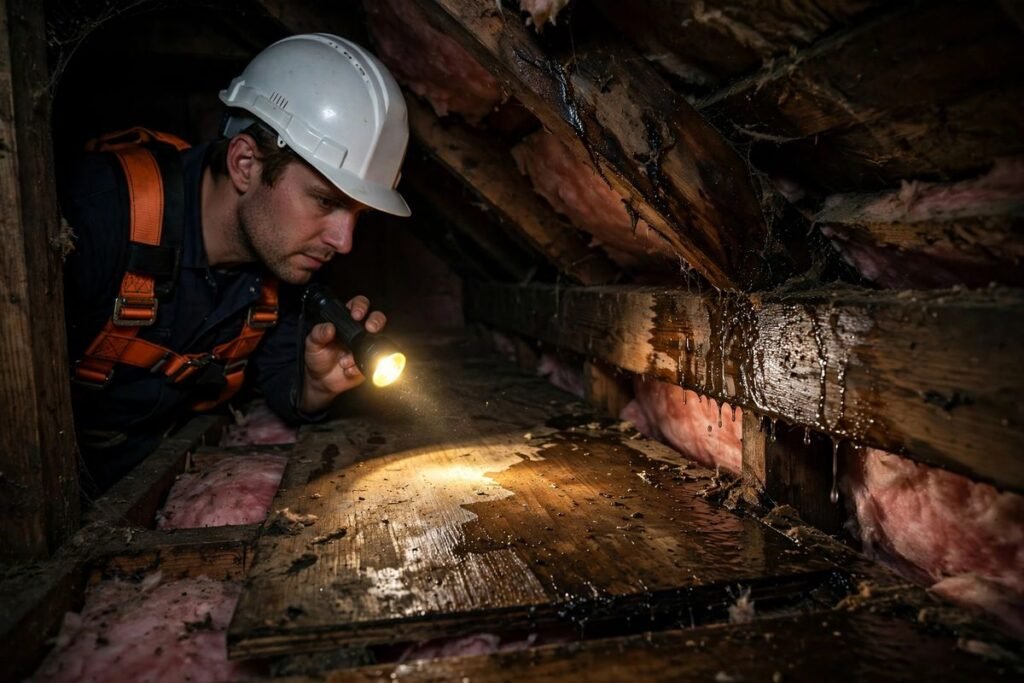
If you cannot get into the attic safely, do not force it. Note where the stain is and which direction the roof slopes above it. A roofer will use that to find the entry point fast in the morning.
Take photos and a short video of everything, the stain, the drip, the bucket, the attic if you went up. Your insurance company will want to see what happened, and photos taken tonight are worth more than any description later.
What NOT to Do Tonight
Do not climb onto the roof. It bears repeating, because it is the most common mistake. Wet shingles are slippery, it is dark, and a fall from a roof can be serious. Wait for daylight and a professional.
Do not try to seal the leak from inside with caulk or foam. It does not work. The water is coming from outside, and sealing the inside just traps it in the roof. You will make the repair harder and more expensive.
Do not ignore a small drip because it looks minor. A slow drip tonight can become a steady stream by morning if the rain keeps up. Catch it, contain it, and call for help.
Do not wait until morning to call if the water is coming in fast. If the drip is steady or spreading, that is an emergency, not a morning job.
When to Call an Emergency Roofer Right Away
Call tonight if water is coming in steadily, if more than one room is leaking, or if the ceiling is sagging badly. Those are signs the roof has taken real damage and needs help now, not in the morning. Emergency roof repair exists for exactly this situation, and a roofer can cover the damaged area with a tarp even in the rain.
When you call, say three things: where the water is coming in, how fast it is dripping, and whether the ceiling is sagging. That tells the roofer what to bring and how urgent it is.
A roofer coming out at night will usually do one thing first, stop the water getting in. That means a tarp over the damaged area, secured properly. The full repair waits for daylight, when the roof can be inspected safely.
If the leak is slow, a drip every few seconds, one small stain, you can usually wait until morning. Keep the bucket in place, check it through the night, and call first thing.
What Will It Cost to Fix a Leak in Durham, NC
A simple leak repair in Durham usually runs $200 to $600. That is a few shingles, resealed flashing, or a small patch, plus finding the entry point. Most small leak jobs take a few hours.
Bigger leak repairs, damage around a chimney, a valley, or a large section of decking, usually run $600 to $1,500. The price depends on how much of the roof is involved and how hard the spot is to reach.
An emergency night call can cost more than a daytime visit, because the roofer is coming out after hours. Ask for the price before they come out, and get it in writing. A straight answer on price protects you from surprises.
If the leak caused damage inside, stained ceilings, wet insulation, damaged drywall, that is a separate repair. Fix the roof first, then deal with the inside. A roofer stops the water; the ceiling repair comes after the roof is dry.
What Happens the Next Morning
In the morning, a roofer will inspect the roof properly in daylight. They will check the shingles, the flashing, the valleys, and the deck underneath. The entry point that was hard to find at night is usually obvious in daylight.
Keep your photos from last night. If the leak was caused by the storm, your homeowner’s insurance may cover the repair. Take pictures of the damage before anything is cleaned up or fixed, and keep every receipt.
Do not put off the repair once the rain stops. A leak that stops when the rain stops is still a leak. The next storm will bring it straight back, and each time it comes back the damage gets worse.
After the repair, ask the roofer to check the rest of the roof. Heavy rain exposes weak spots. A quick check of the flashing and seals now can save you another midnight drip later.
A roof leak at night feels like an emergency, and sometimes it is. But you can handle tonight: catch the water, stay safe, take photos, and call for help when you need it. If your roof is leaking right now, do not wait for morning. Roof Repair Durham offers a free estimate before any work starts, and help is available around the clock.