
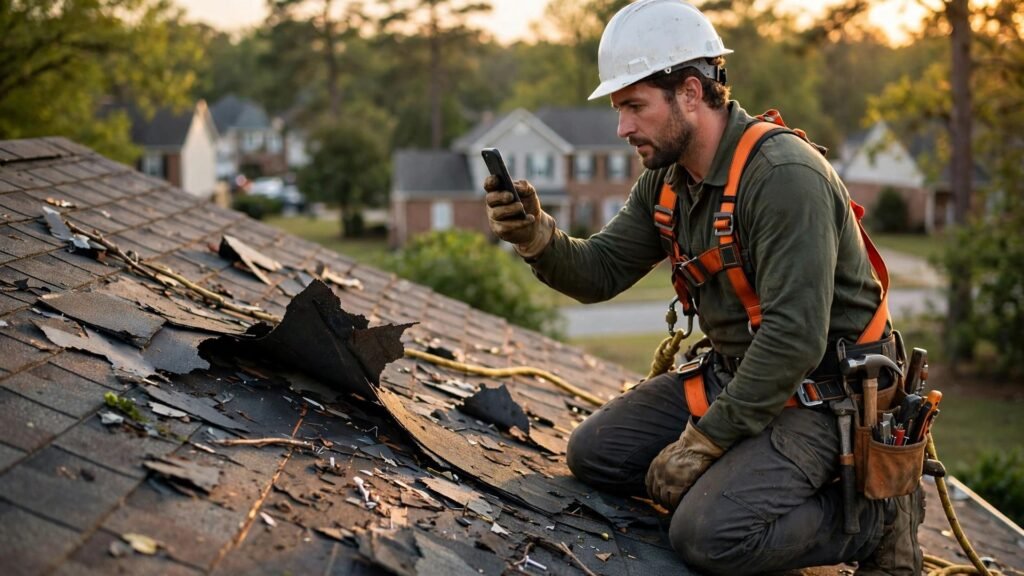
A storm just rolled through Durham, and now your roof is leaking, shingles are missing, or a tree limb is sitting where it should not be. The damage is stressful enough. Then someone says “file an insurance claim,” and it gets worse.
Filing a claim is not as hard as it sounds. It is mostly about doing things in the right order and keeping proof of everything. This guide walks through it step by step, the way it actually works in North Carolina.
If the storm left your roof open to the rain, getting help fast matters more than paperwork. A roofer who handles storm damage roof repair in Durham, NC can cover the damage first and help you document it for the claim.
Start With Safety and Temporary Protection
Do not climb on a wet or damaged roof. Shingles are slippery after a storm, and a roof that looks fine from the ground can have soft spots. Stay inside and look for water coming in.
Put buckets under drips, move furniture and electronics away from wet spots, and lay towels along the path of the water. Small steps like this protect the inside of your home while you wait for help.
If water is still coming in, the roof needs to be covered right away. A tarp over the damaged area stops the leak from getting worse. This is called mitigation, and your insurance policy expects you to do it. If you leave the roof open and the rain keeps coming in, the insurer can refuse to pay for the extra damage.
Call for emergency roof repair if the damage is bad or the leak is active. Keep every receipt for tarps, buckets, or anything you buy to protect the house. Those costs are often part of the claim.
Document Everything Before You Clean Up
Before anyone touches anything, take photos and video of all the damage. This is the single most important thing you will do for your claim.
Photograph the roof from the ground, then get close-ups of missing shingles, cracked shingles, bent flashing, and damaged gutters. Go inside and photograph ceiling stains, wet walls, and water in the attic. Take wide shots that show the whole room, not just the stain.
Do not throw away broken shingles or damaged pieces yet. Put them aside. They are evidence, and the adjuster may want to see them.
Write down the date and time of the storm, and keep a short list of everything that was damaged, room by room. Dates matter. A claim filed weeks later with no photos is much harder to prove than one filed the next day with a full set of pictures.
Read Your Policy Before You Call
Most homeowners policies in North Carolina cover sudden storm damage. Wind, hail, and a tree falling on the roof are usually covered. Flood is not. Flood needs a separate policy, and a standard homeowners policy will not pay for it.
Normal wear and tear is not covered either. If your roof was already twenty years old and leaking before the storm, the insurer will only pay for the part the storm caused. That is why photos from right after the storm matter so much.
Find your deductible. That is the amount you pay out of pocket before insurance pays anything. Some policies have a separate wind or hail deductible, so check for that line. It can be higher than your regular deductible.
Look for two terms in your policy: actual cash value and replacement cost. Actual cash value means the insurer pays what the roof is worth now, after depreciation. Replacement cost means they pay what it costs to fix it with new materials. Many policies pay the actual cash value first, then pay the rest after the repairs are done. Knowing which one you have tells you what to expect.
File the Claim as Soon as You Can
Once the roof is covered and the damage is documented, call your insurer or file the claim online or through their app. Have your policy number ready, the date of the storm, and a short description of the damage.
File promptly. Policies require you to report damage quickly, and waiting weeks gives the insurer a reason to question whether the storm really caused it. A claim filed the same week is always stronger than one filed a month later.
Write down your claim number, the name of every person you speak to, and the date of each call. Keep it all in one place. If something goes wrong later, this record is what you will rely on.
Meet the Adjuster With Your Roofer There
After you file, the insurer sends an adjuster to look at the damage. The adjuster works for the insurance company, not for you. Their job is to measure the damage and decide what the insurer will pay.
Be home for the visit. Walk the property with them and point out every spot you photographed. Damage hides in places people miss: the attic, the flashing around chimneys, vents, and the gutters. If you do not point it out, it may not get written down.
Have your roofer there too. A roofer speaks the same language as the adjuster and can spot damage the adjuster might miss. They can also answer questions about how the roof should be repaired, which keeps the estimate honest.
Get an Independent Repair Estimate
Do not accept the insurer’s first number without checking it. Get a detailed written estimate from a local roofer. It should list the materials, the labor, and each part of the job separately, line by line.
Compare that estimate with the insurer’s. If your roofer’s number is higher, that is normal. Insurer estimates often miss things like replacing damaged flashing, matching shingles, or fixing the decking underneath.
When the numbers do not match, your roofer can send a supplement to the insurer with photos and the missing items documented. This is a normal part of the process. Many claims get adjusted upward once the missing work is shown in writing.
If the Claim Is Denied or Too Low
A denial is not always the end of it. Ask the insurer to send the reason in writing. Read it carefully and compare it with your policy. Sometimes the denial is based on a misunderstanding, like the adjuster thinking the damage was old.
You can ask for a second look. Request a re-inspection and send in your photos and your roofer’s estimate with it. New evidence often changes the outcome.
If you believe the claim was handled unfairly, you can file a complaint with the North Carolina Department of Insurance. They review complaints from homeowners and can ask the insurer to explain its decision. It costs nothing to file one.
Mistakes That Get Claims Denied
Most denied claims have one of a few causes, and all of them are avoidable.
Waiting too long to file is the first. The longer you wait, the harder it is to prove the storm caused the damage.
Cleaning up before taking photos is the second. Once the evidence is gone, the adjuster has only your word for what happened.
Not covering the roof is the third. If rain keeps coming in through an open roof for days, the insurer can say that extra damage was your fault, not the storm’s.
Signing papers you do not understand is the fourth. Never sign anything that hands control of your claim to someone else unless you know exactly what it says. Read it first, and ask questions if the wording is unclear.
Accepting the first low offer without checking it is the last. A quick check against an independent estimate takes a day and can be worth thousands.
A storm damage claim comes down to three things: cover the roof fast, photograph everything, and file quickly with proof in hand. Do those three and the rest of the process gets much easier. If your roof took a hit in the storm, Roof Repair Durham can take a look, give you a free estimate, and help you get the damage documented the right way. Call (984) 230-5620 to get started.