
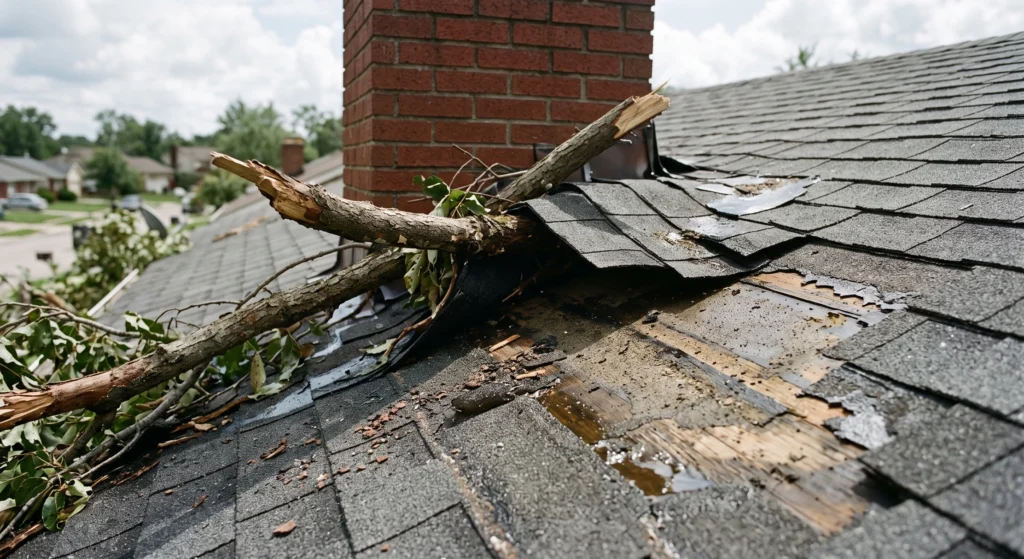
The storm has passed, the yard is full of branches, and something about the roof does not look right. What you do in the first 48 hours decides how much of the damage stays small. Storm damage is sneaky: the worst of it is usually not the shingle on your lawn — it is the lifted, creased, and unsealed shingles still on the roof, quietly ready to leak in the next rain. Here is the order that works for every storm damage roof problem.
Step 1: Safety First on a Storm Damage Roof
Do not climb on the roof. Wet shingles are slick, storm-loosened material can slide, and a branch that looks light can be holding a section of decking down. Everything useful in the first 48 hours can be done from the ground, from a ladder at the eave, or from inside the attic. If a tree is on the house, wires are down, or water is coming through a ceiling fixture, treat it as an emergency first and a roof problem second — our emergency roof repair page covers that situation.
Step 2: Document Before You Touch Anything
Take photos and video from the ground: every slope you can see, shingles or debris in the yard, damage to gutters, and any interior stains or drips with the time visible. If you plan to involve your insurance company, this first-look documentation is the most valuable evidence you will have — shoot it before any cleanup, and keep the timestamps. Note when the storm hit; carriers ask.
Step 3: Walk the Inside, Not the Roof
Go through the top floor and the attic with a flashlight, even if nothing is leaking yet. Look for:
- New water stains or bubbling paint on ceilings
- Damp insulation or shiny wet trails on the underside of the decking
- Daylight visible anywhere it should not be
- Dripping around vents, chimneys, and bathroom fans
Plenty of storm leaks do not show until the next rain pushes water under lifted shingles, so a dry attic today is good news — but mark the date and check again after the next rainfall.
Step 4: Stop the Water
If water is actively getting in, temporary protection is the single most valuable step in the 48-hour window. A properly secured tarp over the damaged area — or an emergency repair of the worst openings — turns a growing interior disaster into a manageable repair bill. Buckets and moved furniture protect the inside; tarping protects the structure. This is also the step insurance companies expect you to take: policies require you to prevent further damage where you reasonably can.
Step 5: Get the Roof Actually Assessed
From the ground, storm damage under-reports itself. The three findings that matter most are the ones you cannot see from the driveway:
- Creased and lifted shingles: wind gets under a shingle, folds it back, and breaks its seal. It lies flat again afterward and looks fine — but it will leak and it will not reseal.
- Damaged flashing: vents, chimneys, and valleys take the wind load; bent or separated flashing is a leak waiting for a rainy week.
- Granule loss and bruising: heavy rain and hail strip the protective granules, shortening the roof’s remaining life even when nothing leaks today.
A proper post-storm assessment documents each of these with photos, which serves you twice: it tells you what truly needs repair, and it gives you a record if you file a claim. You can see everything our crews check on the storm and wind damage page.
What Not to Do
- Do not sign anything with a door-to-door crew that appears before you have had an assessment you trust.
- Do not let anyone talk you into a full replacement before the damage has been documented piece by piece — many storm-damaged roofs need targeted repairs, not a new roof.
- Do not ignore a “small” drip. Water that enters in week one is a stain; by month three it can be rotted decking and mold.
We Can Be the Second Set of Eyes
Roof Repair Durham handles storm response across Durham, NC and the Triangle — emergency tarping, documented assessments, and permanent repairs, with free estimates and photos of everything we find. If your roof took a storm in the last two days, call (984) 230-5620 and we will tell you honestly what it needs and what it does not.